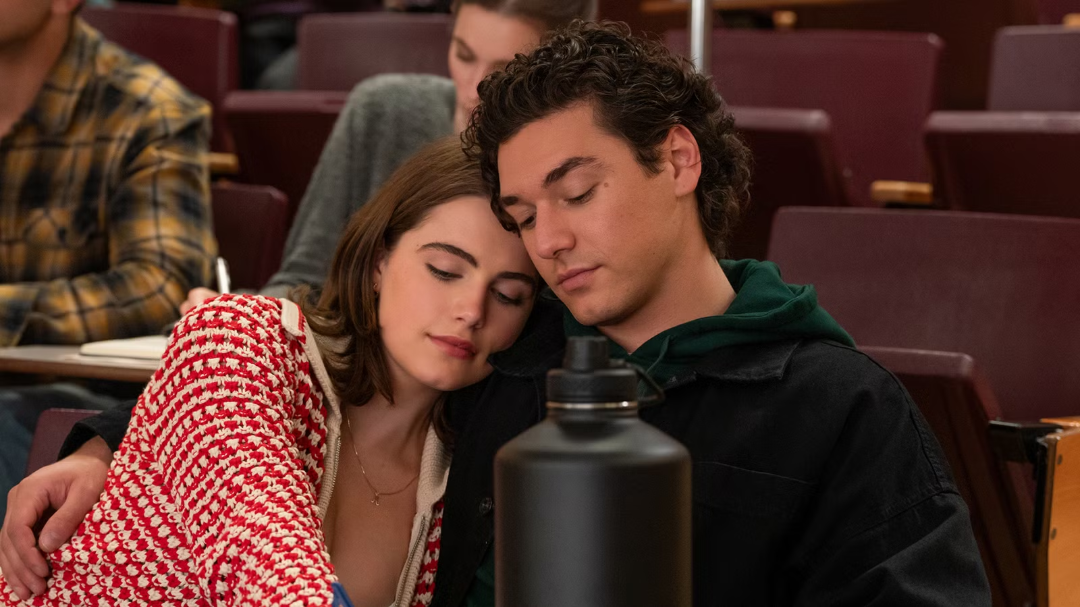
What makes the “Show Me and I’ll Show You” scene in Off Campus so emotionally powerful is that Garrett never approaches Hannah’s vulnerability as something he has earned access to. The entire sequence is built around attentiveness, patience, and emotional safety in a way that feels incredibly intentional. In so many shows, scenes like this are framed around the male character’s anticipation or satisfaction, but Off Campus shifts the emotional focus entirely onto Hannah’s comfort. Garrett is not navigating the moment for himself, he’s navigating it for her.
The brilliance of the scene begins the second Hannah walks into the house. Even before any physical intimacy happens, the show establishes how uncomfortable she feels in her own body. Hannah arriving in something she normally would not wear matters because it immediately changes the way she carries herself. She looks beautiful, but there’s a visible uncertainty in her body language that Garrett picks up on instantly. And what makes Garrett so compelling in this moment is that he responds to her discomfort instead of the fantasy of her. The scene could have very easily leaned into him staring too long or reacting in a way that heightened Hannah’s self consciousness, but instead he immediately begins trying to create comfort for her.
That is why him offering her something else to wear feels so important. It is not framed as him controlling Hannah or policing her appearance. It is Garrett noticing that she feels exposed and trying to give her an out without embarrassing her. Even something as simple as giving her one of his shirts becomes emotionally significant because it shows how closely he pays attention to her comfort. The night before, Hannah wore his jersey while drunk and relaxed, and Garrett subconsciously recreates that same sense of safety for her. The shirt is not just clothing, it becomes emotional protection.
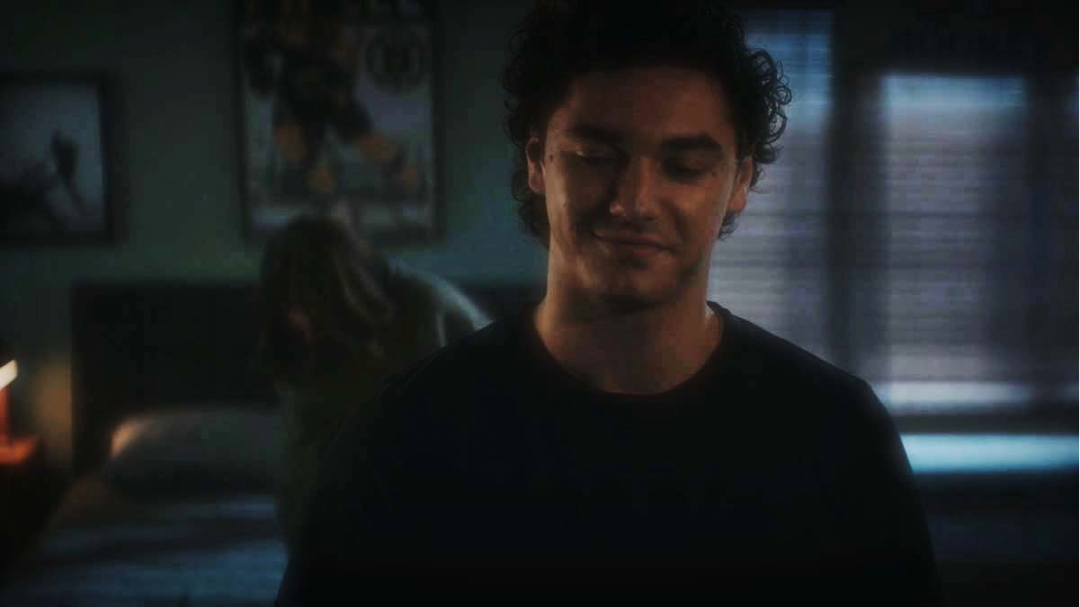
One of the most beautiful details in the entire sequence is Garrett turning around while Hannah changes. It is such a small action, but it defines the emotional language of the scene moving forward. Hannah says, “You’re about to see me naked,” and Garrett responds with, “Yeah, but not until you want me to.” That line changes everything because it establishes that consent here is not treated as a technical requirement, but as emotional trust. Garrett is not waiting for permission so he can finally get what he wants. He is actively prioritizing Hannah’s comfort over his own desire. And because of that, Hannah is finally able to feel safe enough to exist vulnerably in front of someone else.
What makes the writing feel so emotionally mature is that Garrett still leads the scene romantically without ever taking Hannah’s agency away from her. He controls the environment, not Hannah. He puts music on, slows the pace down, dances with her, and gently guides the night forward, but every decision he makes is rooted in making sure she feels emotionally secure enough to stay in the moment. Even the music choice carries emotional significance. “Baby Now That I’ve Found You” is tied to Garrett’s mother and his own emotional vulnerability, whether Hannah realizes it or not. Music is one of the few things that deeply affects Garrett emotionally, and allowing Hannah into that space becomes another act of trust between them. Their dancing is not just flirtation, it becomes emotional regulation. It allows Hannah to release tension and reconnect with her body in a way that feels safe instead of performative.
That is also why the physical blocking of the scene matters so much. When Hannah slowly turns toward him, Garrett lowers himself to meet her instead of forcing her to reach upward toward him. It reinforces the emotional dynamic of the entire scene. Garrett constantly meets Hannah where she is instead of demanding she come to him emotionally, physically, or psychologically. The scene repeatedly emphasizes that intimacy should feel mutual rather than pressured.
The moment on the bed is where the emotional core of the scene fully reveals itself. The second Garrett notices Hannah pulling away emotionally, he stops immediately. And what makes this moment so meaningful is that his first instinct is not defensiveness. He does not ask, “Did I do something wrong?” Instead he asks, “What’s wrong?” which shifts the focus entirely back onto Hannah’s emotional experience. Garrett recognizes that something inside her feels unsafe, even if he himself has done nothing wrong.

That distinction is what makes the “maybe I’m broken” conversation hit so hard. Garrett does not dismiss Hannah’s feelings, but he also refuses to let her define herself by her trauma. When he tells her that sex is the most vulnerable and trust-filled act between two people, the show finally reveals what the entire sequence has actually been about. Hannah trusting Garrett is not enough if she still cannot trust herself within the experience. The issue was never Garrett’s intentions. The issue was whether Hannah felt emotionally safe enough to let herself be vulnerable without fear.
Another super intentional scene happens right after they pull away and Hannah thanks him. Garrett immediately responds with “no, thank you,” and that line carries so much more weight than it seems at first glance.
He’s not treating what just happened as something Hannah needed to thank him for. There’s no sense of him “giving” her an experience that she now owes gratitude for. Instead, his response removes any idea of hierarchy or transaction from the moment entirely. It wasn’t a favour. It wasn’t something done to her. It was something shared between them, rooted in mutual trust. And that matters even more in the context of Hannah’s trauma and emotional hesitation. The scene is already carrying this quiet weight of vulnerability, and yet Garrett never positions himself as someone “guiding” her through it in a way that centers his own ego.
That continues in the way he responds to her fear that something might be wrong with her. When she says she might be broken, he doesn’t validate that fear, but he also doesn’t dismiss her experience. He simply says she’s not broken, and reframes what’s happening as trust, not damage. He explains it in such a simple way: that she does trust him, but trust in this context isn’t just emotional, it’s physical and vulnerable in a way she hasn’t fully reached yet. And instead of pressure, he normalizes that gap. Nothing about his response is rushed or performative. It’s calm, steady reassurance.
What makes this so powerful is how restrained his language is throughout the entire scene. He doesn’t over-explain, he doesn’t dramatize it, and he doesn’t turn it into something bigger than it is. He just meets her where she is and lets the moment exist without judgment. And even the fact that he suggested the entire “Show Me and I’ll Show You” idea in the first place matters. Because it isn’t framed as him pushing her into something she isn’t ready for, it’s framed as him offering a structure where she can explore trust safely, with control still in her hands.
What makes the scene almost frustratingly emotional is that none of Garrett’s behavior should feel revolutionary. Respecting someone’s comfort, paying attention to body language, prioritizing mutual trust, and caring about a woman’s emotional and physical experience should be the bare minimum. But television has spent years normalizing intimacy that centers male gratification first and female comfort second, especially in college romances where female vulnerability is often framed as something men “earn” access to. That is why Garrett feels so different. The scene is not rewarding him for basic decency, it is exposing how rare emotional attentiveness has become in portrayals of intimacy. Garrett’s focus never shifts toward conquest, entitlement, or even his own satisfaction. The emotional center of the scene remains Hannah: her comfort, her trust, her pleasure, and whether she feels safe enough to stay emotionally present in the moment.

At its core, the scene isn’t just about intimacy, it’s about how carefully Garrett responds to vulnerability when it’s placed in front of him, and how consistently he prioritizes reassurance over entitlement. Off Campus understands that real intimacy is not about pushing someone into vulnerability, but creating the kind of safety where it can exist naturally. Garrett doesn’t heal Hannah, fix her trauma, or erase her fears. What he gives her is something quieter but more meaningful: the ability to feel emotionally safe while carrying them. This is what makes the scene so memorable and moving.